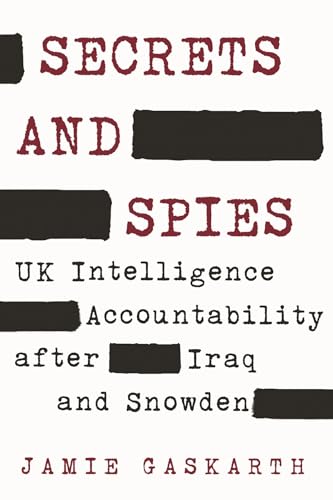
Secrets and spies : UK intelligence accountability after Iraq and Snowden / Jamie Gaskarth.
Material type: TextSeries: The Chatham House insights seriesPublisher: Washington, D.C. : Brookings Institution Press, [2020]Description: x, 189 p. 23 cmContent type:
 - text
- unmediated
- volume
- 9780815737971
- 327.1241 23
- JN329.I6 G37 2020
| Cover image | Item type | Current library | Home library | Collection | Shelving location | Call number | Materials specified | Vol info | URL | Copy number | Status | Notes | Date due | Barcode | Item holds | Item hold queue priority | Course reserves | |
|---|---|---|---|---|---|---|---|---|---|---|---|---|---|---|---|---|---|---|
 Books
Books
|
NIRU LIBRARY On display | JN329.I6.G37 2020 (Browse shelf(Opens below)) | Available | 2023-0044 | ||||||||||||||
|
Books
|
NIRU LIBRARY On display | JN329.I6.G37 2020 (Browse shelf(Opens below)) | Available | 2023-0045 |
Includes bibliographical references and index.
Theory on accountability and intelligence -- Scrutinising the UK intelligence machinery -- Practitioner views of accountability -- National intelligence accountability -- Liaison and international intelligence accountability.
"Using the UK as a case study, this book provides the first systematic exploration of how intelligence professionals view their role, what they feel keeps them honest, and to what extent external overseers influence their work. Moving beyond the conventional focus on oversight, the book examines how accountability works in the day-to-day lives of those in the intelligence community, and considers the impact of technological and social changes, such as artificial intelligence and social media. The UK is a useful case study as it is an important actor on the global intelligence scene, gathering material that helps inform global decisions on such issues as nuclear proliferation, terrorism, transnational crime, and breaches of international humanitarian law. On the flip side, the UK was a major contributor to the intelligence failures leading to the Iraq War in 2003, and its agencies were complicit in the widely discredited U.S. practices of torture and rendition of terrorism suspects. UK agencies have come under greater scrutiny since those actions, but it is clear that problems remain. The book concludes with suggestions for improvement, including the creation of an intelligence ethics committee, allowing the public more input into intelligence decisions. The issues explored in this book have important implications for researchers, intelligence professionals, overseers, and the public in understanding and scrutinizing intelligence practices"-- Provided by publisher.
There are no comments on this title.